
Prof. Dr. Aylin Kılıç Eye Diseases and Surgery
As we age, lens dysfunction develops, a broad term covering conditions such as cataract, presbyopia and other disorders that affect the eye’s natural lens.

What Is the Intraocular Lens (IOL) Procedure?
When the lens loses its transparency or flexibility, vision deteriorates, causing symptoms such as blurred vision, difficulty focusing and impaired vision that sometimes affects near vision and sometimes distance vision.
Intraocular lens treatment is a method preferred especially for treating vision disorders such as cataract. This treatment is based on removing the eye’s natural lens and replacing it with a lens manufactured using advanced technology. Intraocular lenses differ from contact lenses: they are placed permanently inside the eye and take over the function of the natural lens. This treatment is performed to improve the quality of vision and resolve eye problems.
It involves removing the clouded lens affected by the development of a cataract and replacing it with an artificial intraocular lens. In this stitch-free surgery, performed with the phaco method, modern intraocular lenses come in several types, including monofocal, multifocal and toric lenses, and the surgical plan can be customized to the patient’s visual needs. Cataract surgery with intraocular lens implantation not only restores clarity but also frees patients from dependence on glasses or contact lenses.
Individuals struggling with presbyopia can benefit from multifocal intraocular lenses designed to provide clear vision at different distances. These lenses contain more than one focal point and allow near and distance vision to be improved without the need for reading glasses.


Technological advances in intraocular lens design have led to the development of premium lenses such as toric and extended depth of focus (EDOF) lenses. While toric lenses correct astigmatism, extended depth lenses improve vision at various distances, offering patients a wider range of visual acuity.
The phaco surgery method is a common and highly successful procedure used to treat various conditions of the eye's lens, cataract first among them.
Pre-Operative Evaluation: Before surgery, a comprehensive examination is performed to evaluate and determine the patient's occupation, social life, the type of lens they need and their eye health. Measurements of the eye, including the cornea and eye length, are taken to ensure the correct choice and placement of the intraocular lens.

IOL implantation surgery is generally an outpatient procedure performed under local anesthesia, that is, drop anesthesia, so the patient does not need to stay in the hospital. This means that the patient is awake but will not feel pain during surgery. In some cases, intravenous sedation may be provided to help the patient relax.
A very tiny, millimeter-sized incision is made in the cornea or the clear front part of the eye. In recent years, many surgeons have come to prefer smaller incisions, known as micro-incisions or clear corneal incisions, to minimize trauma to the eye and facilitate faster recovery.
Phacoemulsification is a widely used technique for breaking up and emulsifying a cataract or cloudy lens. The eye is entered with a tiny 1-2 mm instrument that emits ultrasound waves, which break the natural lens we want to remove into small pieces. The emulsified pieces are then suctioned out of the eye.
After the natural lens is removed, the artificial intraocular lens is inserted through the same small incision. The IOL is carefully placed inside the lens capsule and stays securely in place without requiring stitches.
In many cases the incision closes on its own and does not require stitches. The natural flexibility of the cornea helps it heal by itself.
Patients are monitored for a short time after surgery and most can go home the same day. Vision may be blurry at first, but it improves as the eye heals.
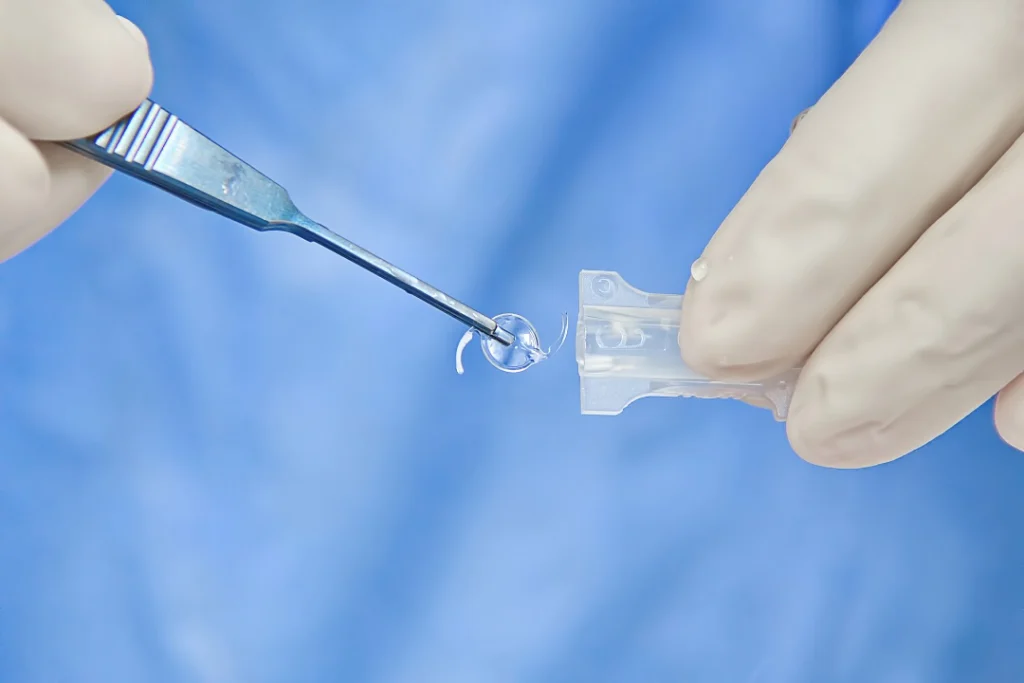
While correcting distance vision, they do not at the same time correct near vision and existing astigmatism. Monofocal lenses are the simplest, most basic type of intraocular lens. They typically provide clear vision at a single focal point, either near or far.

Definition: Multifocal lenses have more than one focal point and allow patients to see clearly at different distances (e.g., near, intermediate and far).

Toric lenses are designed to correct astigmatism, a common condition in which the cornea or lens has an irregular shape, leading to blurred or distorted vision. Toric IOLs are especially beneficial for patients with astigmatism, providing clearer vision and reducing the need for glasses after surgery.
You can contact me about your condition, my treatment methods and anything else you would like to know.
For patients who want to improve their quality of vision and permanently correct eye defects, intraocular lens (IOL) procedures are among the most effective solutions in modern ophthalmology.
Intraocular lens (IOL) treatment is preferred especially for cataract or for refractive errors such as high myopia and hyperopia. With this method, the natural lens is replaced with a special artificial lens, and patients gain clear vision for many years.
Phaco surgery, the most frequently used method in the treatment process, is a surgical procedure performed through micro-incisions that requires no stitches. This keeps patient comfort at the highest level and considerably shortens the recovery process.
The lenses used in intraocular lens (IOL) treatment are selected according to the patient's visual needs. With monofocal, multifocal, or trifocal intraocular lens (IOL) options, clear vision is provided at far, near, and intermediate distances.
Aylin Kılıç, a specialist physician in her field, and her experienced team create a personalized plan for each patient and achieve safe and lasting results.
For clearer vision and a better quality of life, discover the latest technologies in intraocular lens (IOL) treatment.
 Can Laser Surgery be Performed After Intraocular Lens Application?
Read more
 Are Intraocular Lenses Healthy? How Long Can They Stay Inside Our Eyes?
Read more
 Are Multifocal Lenses or Monofocal Lenses Better?
Read more
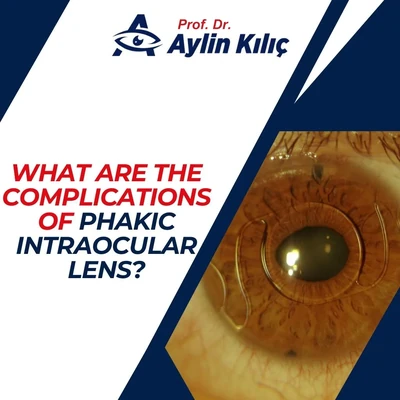 What are the Complications of Phakic Intraocular Lens?
Read more
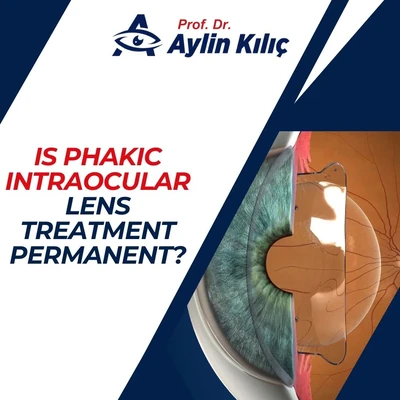 Is Phakic Intraocular Lens Treatment Permanent?
Read more
 Is Phakic Intraocular Lens Suitable for Everyone?
Read more
 Multifocal Lens? Or Laser?
Read more
 What is Trifocal Lens? What are the Advantages?
Read more