
Prof. Dr. Aylin Kılıç Eye Diseases and Surgery
There are effective treatment methods available to eye patients who want to say goodbye to glasses and contact lenses. We can say that laser surgery is one of the most effective treatments here.
It must also be said that laser surgeries, which generally provide definitive and lasting results, have become far more varied with advancing technology. One of the laser treatments that stands out in this variety, which allows more people to be served, is LASEK. So what is LASEK? What advantages does it offer, and how is it performed? Let's take a look.
LASEK (Laser-Assisted Sub-Epithelial Keratectomy), is a surface laser treatment in which an excimer laser is used to create surface ablations on the cornea without creating any flap in the cornea.
Unlike common laser treatments such as LASIK, this method does not create a flap. The necessary corrections are made on the corneal surface using only the laser, and the patient’s vision becomes clear again.
The treatment is used to correct common refractive errors such as myopia, astigmatism and hyperopia.
We noted that the procedure uses only the laser. It is worth adding that the surgical process is set up around this as well.
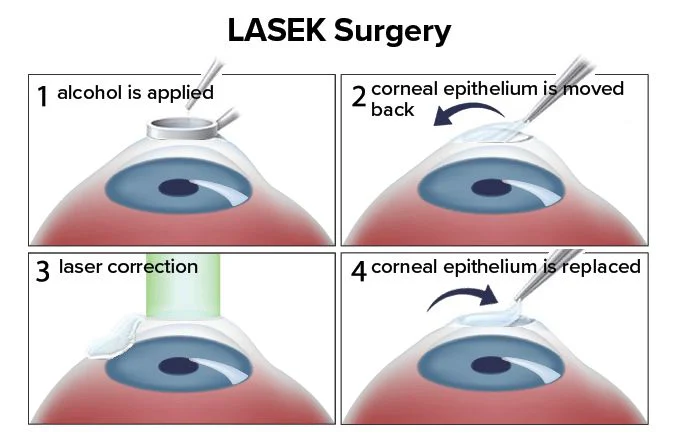
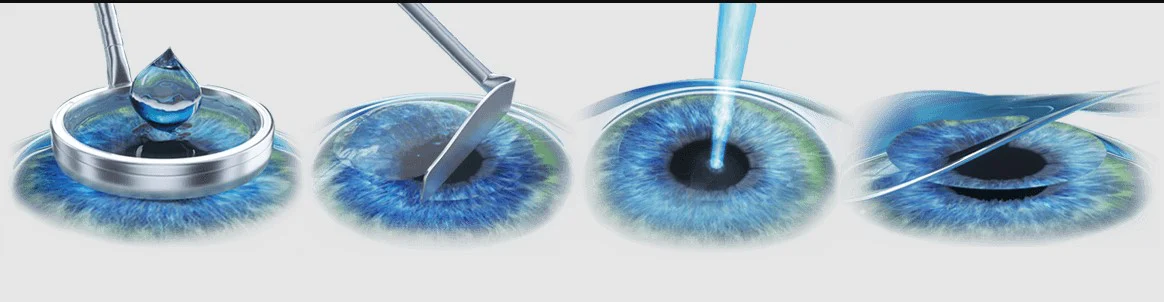
Just as in PRK, the LASEK procedure first works on the epithelial tissue on the surface of the eye. Diluted alcohol is applied to the epithelial tissue to loosen it. The epithelial tissue is then lifted.
Next, the same laser treatment used in LASIK is applied to the corneal surface. What sets this procedure apart from PRK is that the epithelial tissue is not folded and discarded. After the laser treatment, the epithelial tissue is placed back in position. This will make the recovery process faster.
Like all other laser treatments, LASEK has preparation stages before the procedure. We can summarize the period before the operation as follows.
Because little is done to the cornea and no flap is created, the risk of dry eye after LASEK is lower. However, it should be remembered that dry eye is not related only to the intervention on the cornea.
Bringing the ocular surface and tear ducts to an optimal level before the operation means bringing the risk of dry eye down to its lowest levels. To prepare the ocular surface, you can also choose solutions such as Laser PrimeCare. As with similar methods, the main goal of Laser PrimeCare is to prepare the person by bringing the ocular surface to an optimal condition. You can get detailed information right here.
With all this, we have explained what LASEK is. Remember, your doctor’s guidance is very important when deciding on laser treatment. First and foremost, you need to be examined by a specialist doctor and find out which laser treatment will be best for you.
You can contact me about your condition, my treatment methods and anything else you would like to know.
 What is PTK Laser (Phototherapeutic Kerarectomy)? Why is it Preferred?
Read more
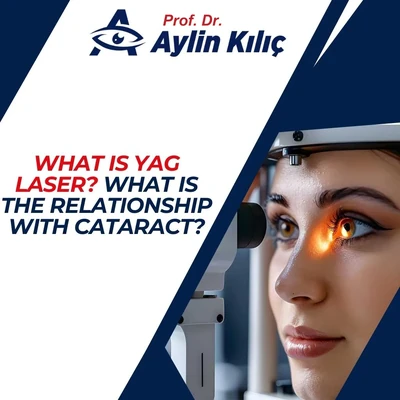 What is YAG Laser? What is the Relationship with Cataract?
Read more
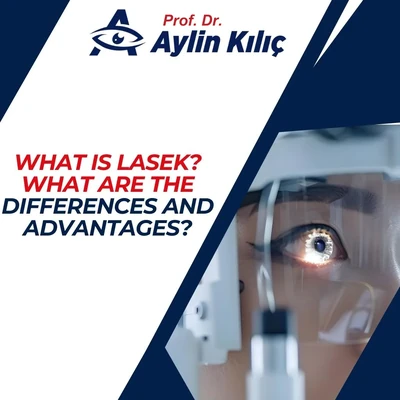 What is LASEK? What are the Differences and Advantages?
Read more
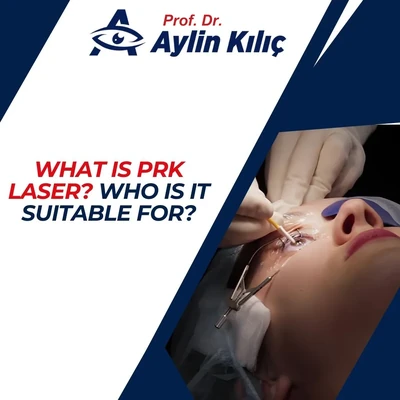 What is PRK Laser? Who is it Suitable for?
Read more
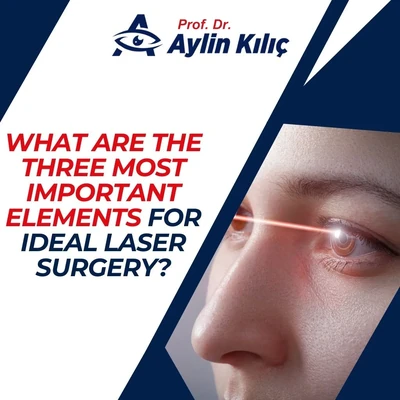 What are the Three Most Important Elements for Ideal Laser Surgery?
Read more
 Can Blindness Develop After Laser Surgery?
Read more
 Can High Astigmatism be Corrected with Laser?
Read more
 How much thinner is our cornea in laser surgery?
Read more