
Prof. Dr. Aylin Kılıç Eye Diseases and Surgery
Laser eye surgeries are generally performed to correct refractive errors in the eye and restore clear vision. But in fact, laser treatment is not used only to correct refractive errors.
There are different laser treatments preferred for different vision complaints. YAG laser treatment is one of them. Contrary to popular belief, YAG laser does not involve making corrections on the cornea or correcting refractive errors. So what is this treatment for, and in which situations is it preferred?
YAG (yttrium aluminum garnet laser) is a precise type of laser that allows unwanted tissue inside the eye to be removed. Although it is used to resolve several different problems, it is mostly preferred for the capsule clouding experienced after cataract surgery.
We need to explain this a little further. First, let us briefly explain what cataract surgery is and how it is performed. In cataract, clouding develops in the eye's natural lens.
Over time, this clouding progresses to the point of obstructing vision, and it stands out as a progressive disease. At the treatment stage, what needs to be done is to remove the clouded lens and place a new lens in its place.
When the new lens is placed in the eye, the membrane in which the lens is positioned is left in place. The reason is so that the artificial lens has something to hold on to in the eye. Not in every patient, but in later periods, blurring and clouding can develop in this membrane left inside the eye.
In such cases, YAG laser is preferred and the clouding that has developed in the membrane is removed.
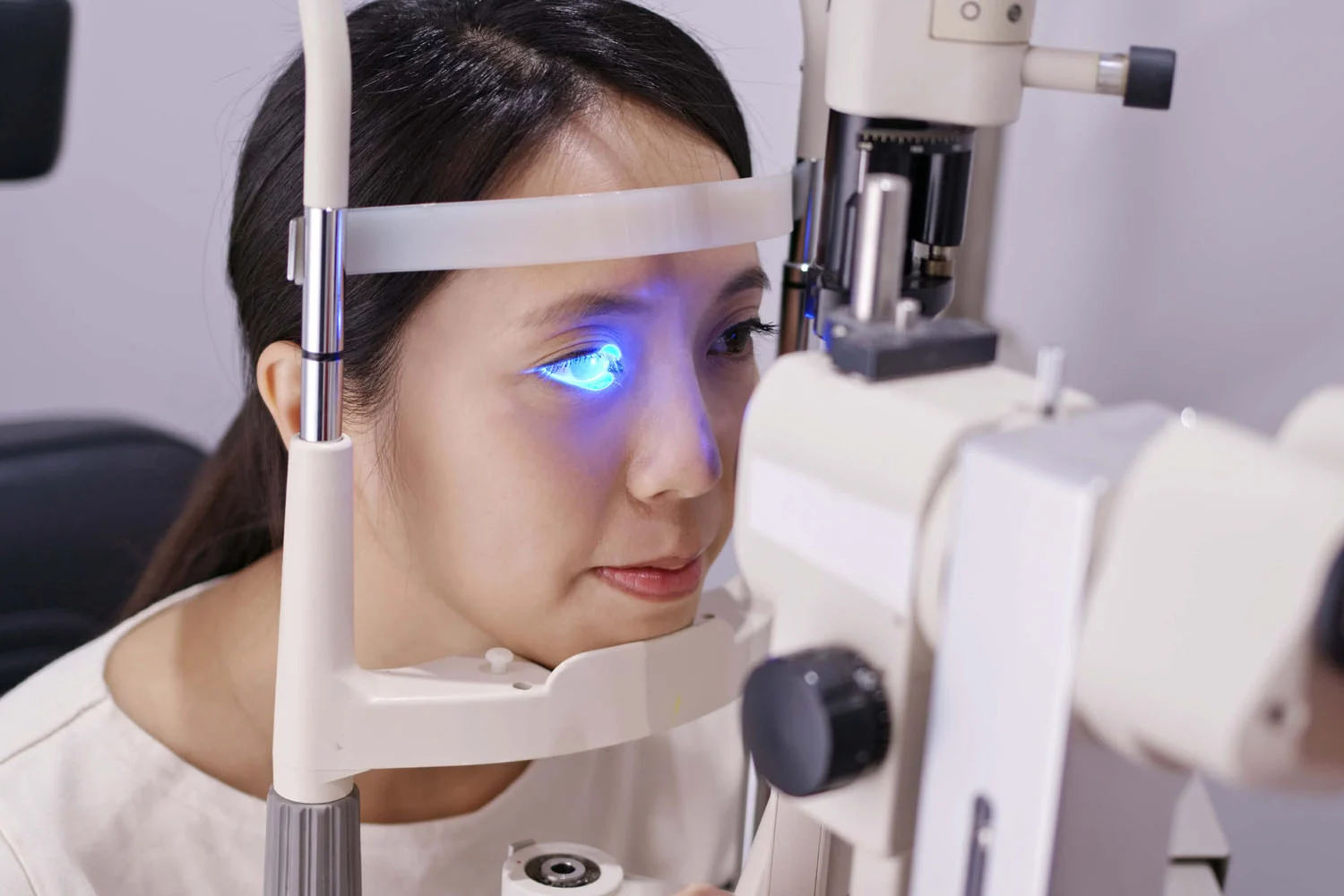
We are talking about a very simple operation. It does not involve surgery of any kind. The operation can be performed in the examination room and can be considered an outpatient treatment.
During this process, the necessary drops are placed in the patient’s eye to dilate the pupil. Anesthetic drops are then applied to numb the eye. Once the eye is numb, the treatment begins with a special laser instrument.
During the laser treatment, patients only perceive sound and light. The operation is completed after a procedure lasting 5-10 minutes.
After the laser procedure is complete, the patient must rest for a while. Because of the effect of the drops used to dilate the pupil, problems such as blurred vision may also be experienced for a certain time.
Vision problems are expected to pass within a few hours. During this time, the patient may be given soothing drops, and certain medications may also be given to prevent intraocular pressure from rising.
Because it is a simple, blade-free procedure, the complications the treatment can cause are also limited. In rare cases;
Most of these side effects are temporary and short-lived. However, if the effects persist for a long time, you should consult your doctor.
You can also take precautions against dry eye, which is a risk of laser treatments in general. The most effective solution for this is to bring the ocular surface to its ideal condition before the operation. Solutions such as Laser PrimeCare are offered for this purpose. If you would like to learn more about Laser PrimeCare, you can visit the link here.
You can contact me about your condition, my treatment methods and anything else you would like to know.
 What is PTK Laser (Phototherapeutic Kerarectomy)? Why is it Preferred?
Read more
 What is YAG Laser? What is the Relationship with Cataract?
Read more
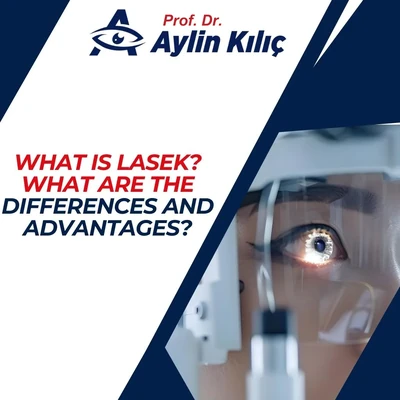 What is LASEK? What are the Differences and Advantages?
Read more
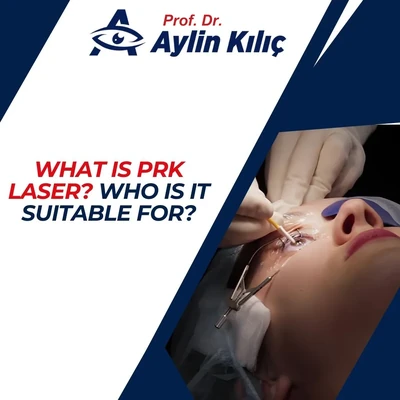 What is PRK Laser? Who is it Suitable for?
Read more
 What are the Three Most Important Elements for Ideal Laser Surgery?
Read more
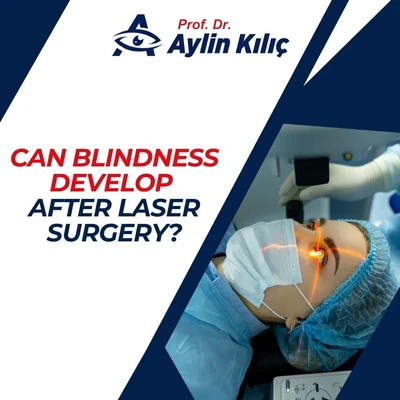 Can Blindness Develop After Laser Surgery?
Read more
 Can High Astigmatism be Corrected with Laser?
Read more
 How much thinner is our cornea in laser surgery?
Read more